

Nintendo Switch Vs Nintendo Switch Lite
Nintendo Switch OLED vs. Nintendo Switch vs. Switch Lite: What should you purchase?
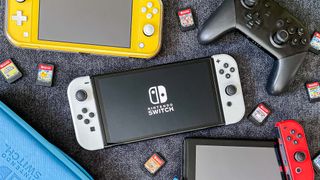
The Nintendo Switch OLED is finally here, and it's a tempting prospect — peculiarly if you don't already own a Switch.
However, if you're looking to buy Nintendo'southward handheld hybrid for the first time, you shouldn't simply grab the OLED version and call information technology a twenty-four hours. In that location are three Switch variations from which to choose — the premium Switch OLED, the cheap Switch Calorie-free and the middle-of-the-road base Switch — and each one offers certain advantages and drawbacks.
The good news is that at that place aren't a tremendous number of differences among the three models. No matter which Switch you get, you'll be able to play the same games, navigate the same interface and enjoy the aforementioned handheld feel. What sets the Switch models autonomously, for the most part, are their screen sizes and their TV connectivity, and those features are all easy to explain.
The Nintendo Switch OLED vs. Nintendo Switch vs. Nintendo Switch Lite contest doesn't have to be a complicated result if you know what you're looking for and how much y'all want to spend. Hither are the similarities and differences amidst the 3 devices.
Nintendo Switch OLED vs. Nintendo Switch vs. Nintendo Switch Lite: Specs
| Nintendo Switch OLED | Nintendo Switch | Nintendo Switch Lite | |
| Price | $350 | $300 | $200 |
| Screen | vii-inch OLED, 720p, lx Hz | 6-inch LCD, 720p, lx Hz | 5.5-inch LCD, 720p, lx Hz |
| Dimensions | 9.4 x iv.0 x 0.6 inches | 9.4 10 4.0 x 0.6 inches | viii.2 ten three.6 x 0.half dozen inches |
| Weight | 14.ix ounces | 14.1 ounces | nine.eight ounces |
| Battery Life | 4.5 to 9 hours | 4.5 to nine hours* | 3 to 7 hours |
| Storage | 64 GB | 32 GB | 32 GB |
| TV Docking | Yeah | Yes | No |
| Detachable Joy-Cons | Yes | Yes | No |
| Colour Options | Black and White / Red and Blue | Gray / Red and Blue | Grayness / Turquoise / Xanthous/ Pinkish / Imperial |
* 2019 and after. Models from 2018 and before offer 2.v–half dozen.5 hours
Nintendo Switch OLED vs. Nintendo Switch vs. Nintendo Switch Light: Similarities
First things start: No matter which Switch you buy, y'all'll be able to play exactly the aforementioned games. That'southward extremely important to know. Nintendo has not express any of its games' compatibilities based on the version of the Switch yous own, and information technology'due south unlikely to practice so in the hereafter. Every Switch console tin can play every Switch game, via either a concrete cartridge or a digital download.
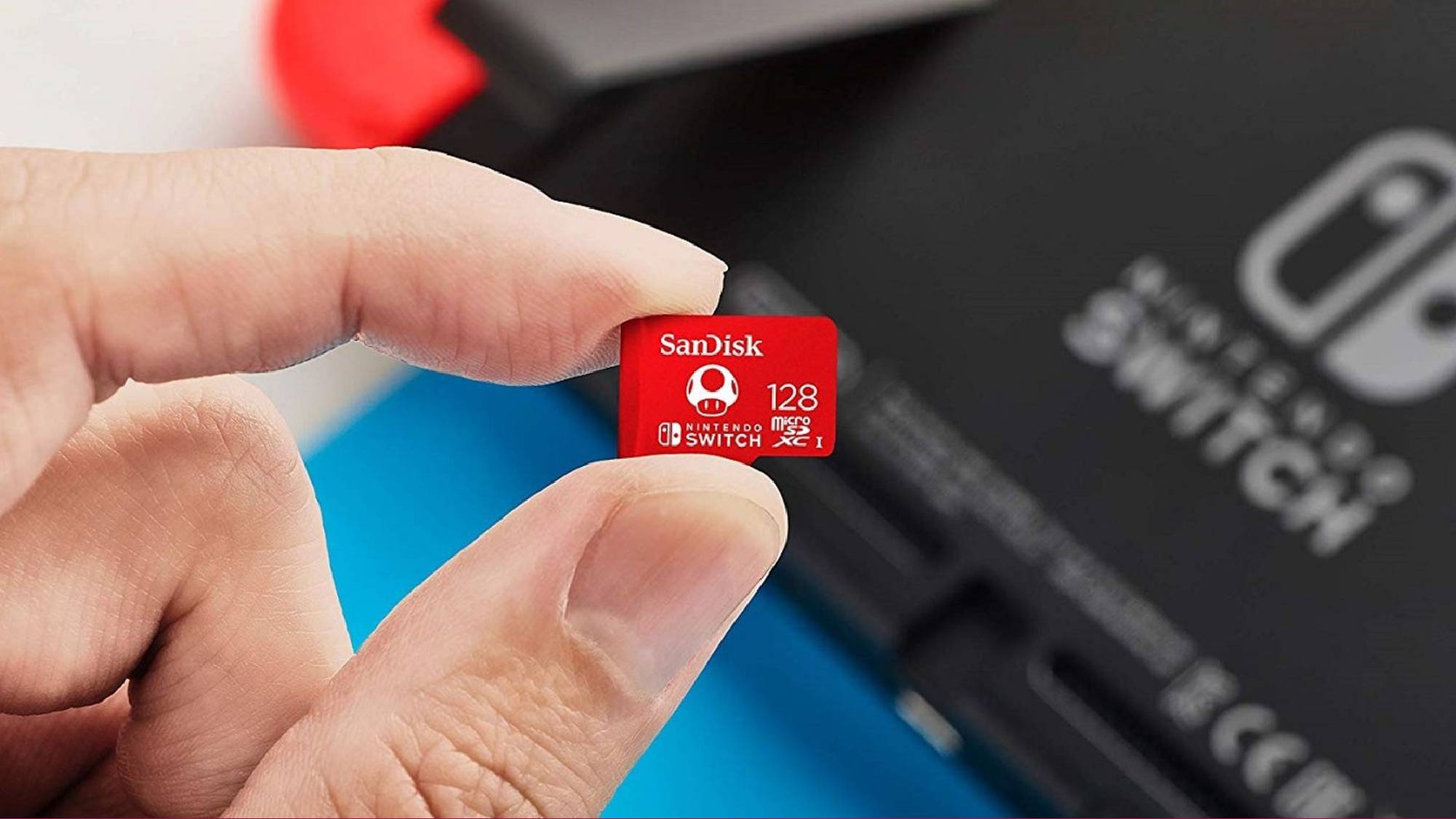
Similarly, the guts of each Nintendo Switch model are functionally identical. Each one runs off of a custom Nvidia Tegra X1 chipset, with 4 GB RAM and a microSD carte du jour slot to expand storage.
There are two slight differences here: the Switch Lite runs a Tegra X1+ chip, which improves battery life for the smaller device. The Switch OLED offers 64 GB internal storage, equally opposed to the base Switch and Switch Lite, which each offering 32 GB. The Tegra X1+ does not announced to enhance the Switch Calorie-free's gaming functioning, even so. Likewise, the storage differences aren't super-important, since it's both like shooting fish in a barrel and inexpensive to expand storage via microSD.
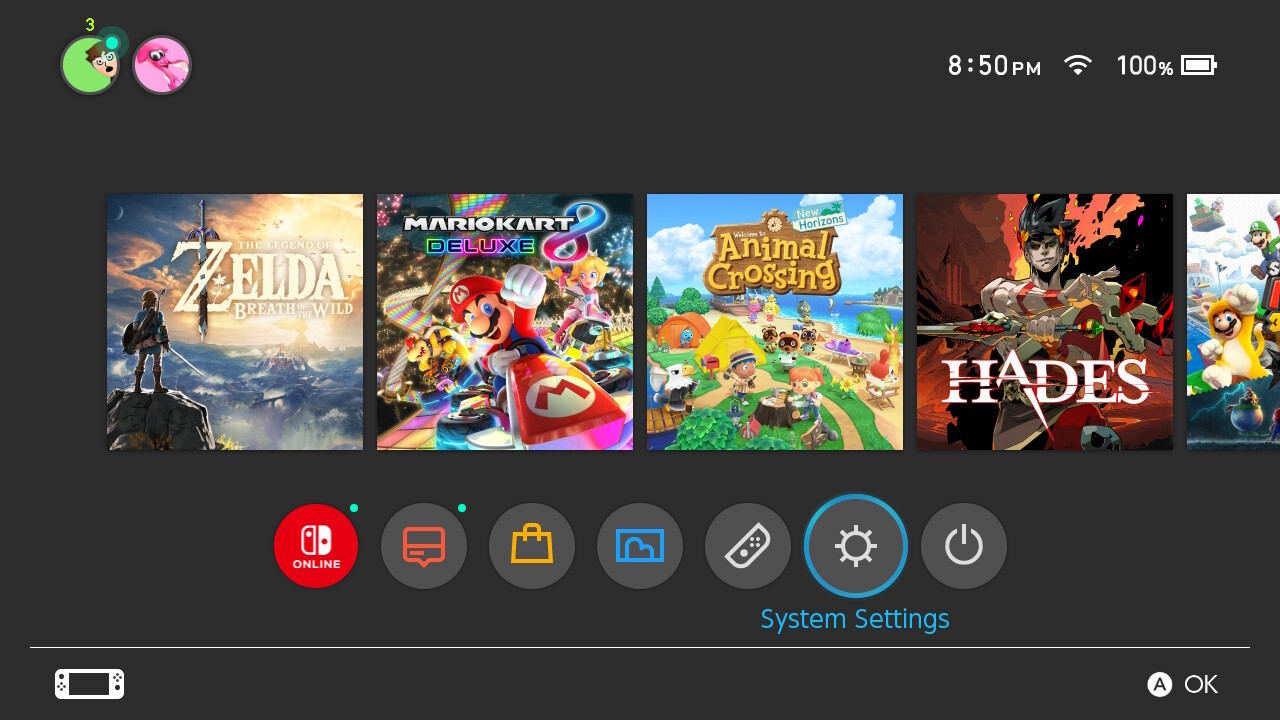
Every Switch model functions in a handheld style; every Switch model uses the same straightforward Bone to navigate through games and apps; every Switch model supports Wi-Fi connectivity, Bluetooth audio and a scattering of USB-C accessories.
If you take the Switch Calorie-free out of the moving picture for a moment, the similarities are fifty-fifty more striking. The base Switch and Switch OLED are exactly the same size and about the aforementioned weight. They offer virtually the aforementioned battery life. They tin both connect to TVs and detach their Joy-Cons for impromptu multiplayer sessions.
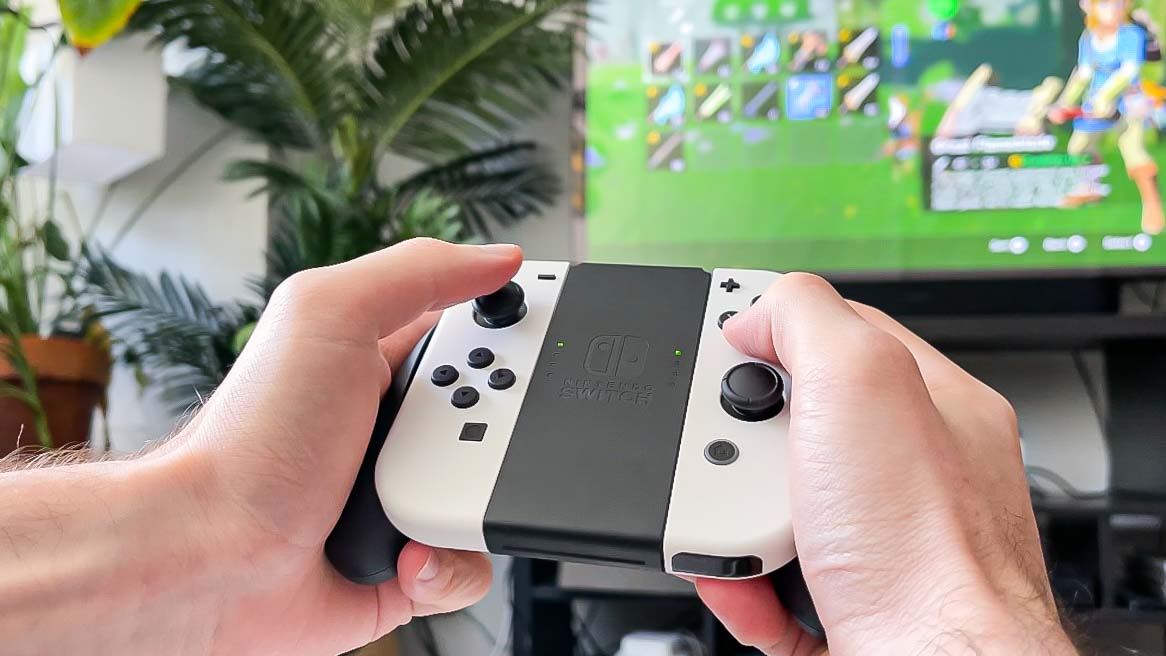
In other words: while the iii Switch models aren't exactly interchangeable, you can't go too wrong with any of them.
Nintendo Switch OLED vs. Nintendo Switch vs. Nintendo Switch Light: Pattern
The Switch and Switch OLED are, for the most office, interchangeable in terms of physical design. While the base of operations Switch is a piddling lighter (less than an ounce), they both share the aforementioned profile: a central touchscreen tablet with a detachable Joy-Con controller on either side.
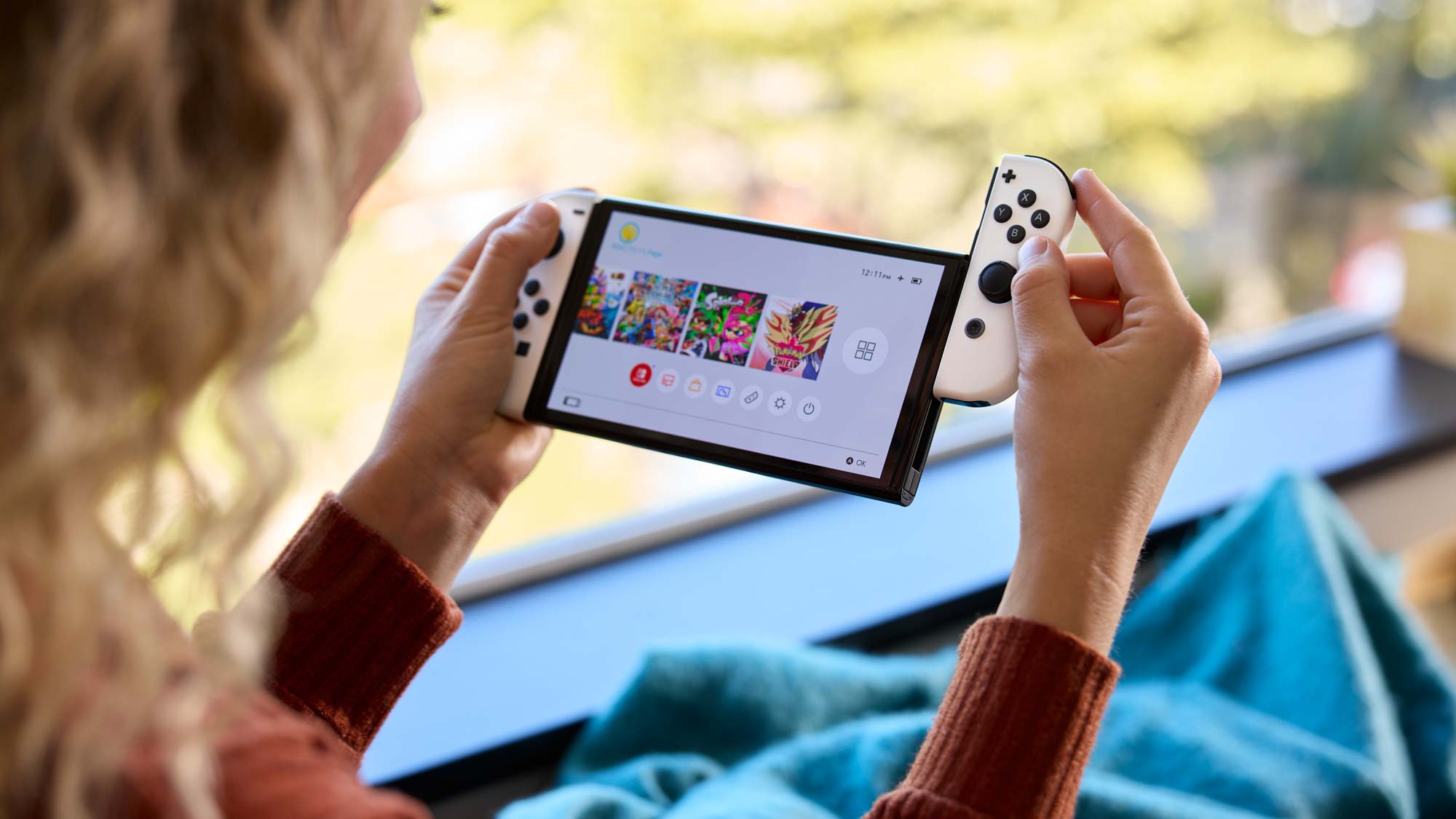
There are two main differences betwixt the base Switch and the Switch OLED, apart from their screens. The first is that the OLED has larger, more robust speakers. The second is that the OLED has a written report kickstand that runs the length of the whole device, while the base Switch has a flimsy kickstand that takes upwardly only a few inches of space.
The Switch Calorie-free, on the other mitt, is a dissimilar beast altogether. It's a much smaller console (eight inches across instead of 9-and-a-half), and doesn't have whatever options to dock information technology with a Tv. As such, y'all can play information technology only in handheld mode.
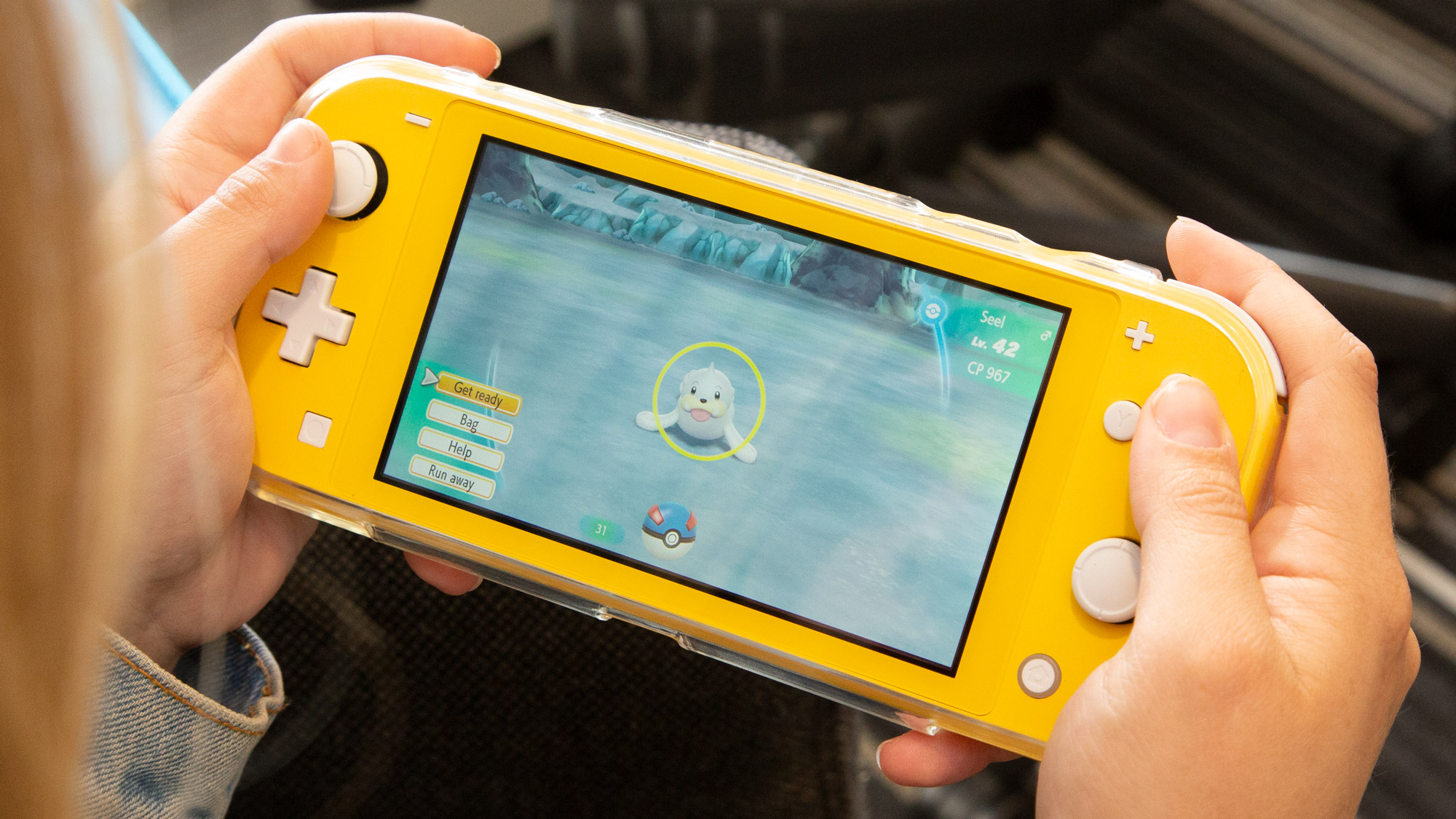
The controls are as well hardwired into the console, then there are no Joy-Cons to remove. The Switch Lite does accept ane big benefit over its bigger brethren, though: an actual D-Pad rather than iv uncomfortable directional buttons.
Nintendo Switch OLED vs. Nintendo Switch vs. Nintendo Switch Lite: Screen
The biggest differences betwixt all 3 Switch models comes from the brandish. All three are different sizes, with the Switch OLED naturally having a different panel.
The Switch Lite has the smallest display coming in at 5.five inches. That's trumped by the standard Switch's display, which measures in at 6 inches. Both have the aforementioned LCD technology, and deliver reasonably impressive screens that have decent brightness and a good range of colors.
But if you want the all-time Switch screen you need to go for the Switch OLED. It'southward organic light-emitting diode brandish, the same type of tech y'all'll find on the all-time phones, offers a much brighter, more dissimilarity-heavy and color rich display that its stable mates. And at 7 inches, it'southward larger too.
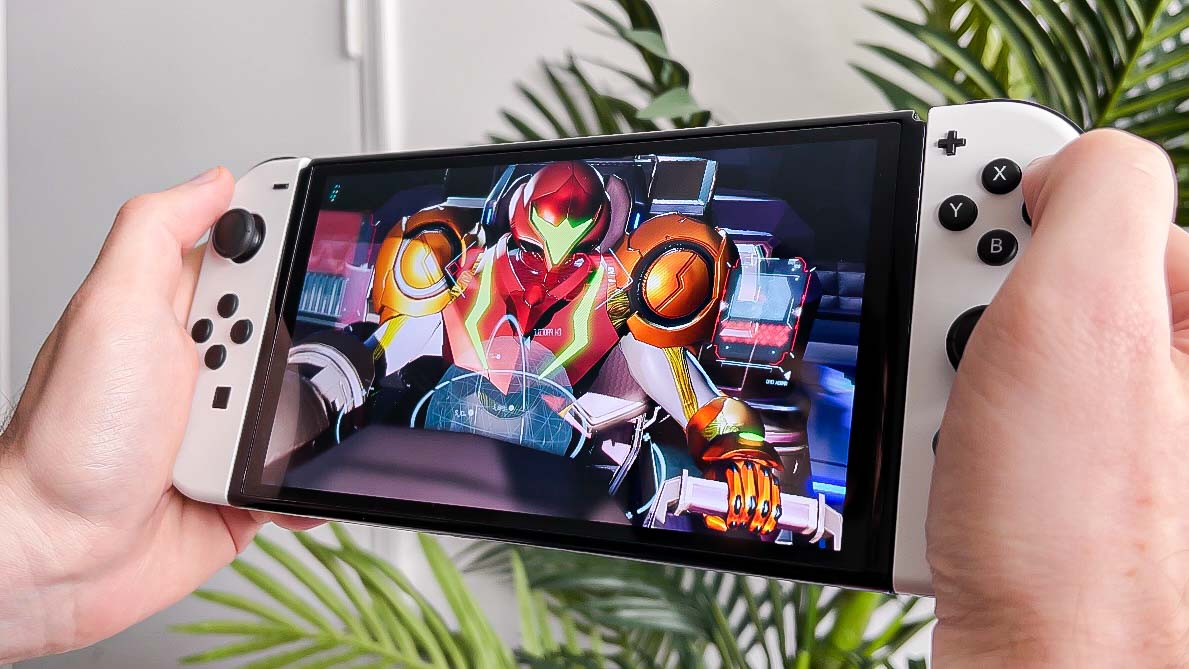
Still, all three screens use a 720p resolution and have a adequately standard 60Hz refresh charge per unit.
Nintendo Switch OLED vs. Nintendo Switch vs. Nintendo Switch Lite: Dock and TV compatibility
The primary disadvantage of the Switch Lite is that you lot can't connect it to a Television receiver. It's a pretty sizable drawback. Obviously, Nintendo considers the ability to switch between handheld and docked modes important plenty to name the whole console later the feature.
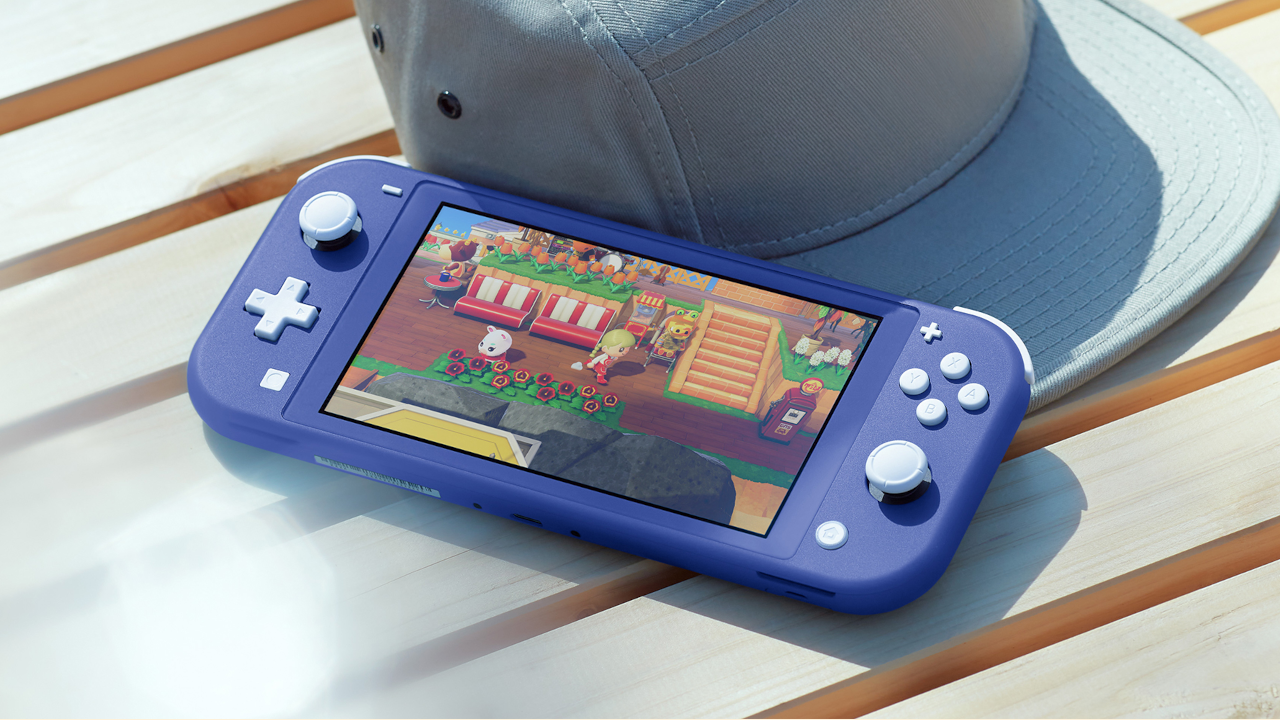
Still, at that place are some folks out at that place who really have no involvement in playing the Switch on a Television screen. The Switch Lite is likewise arguably a good match for younger kids, peculiarly if there's a dearth of shareable TVs in the house.

The base of operations Switch and Switch OLED can both connect to a TV without issue, equally each one comes with a dock. The docks, however, are e'er-so-slightly different. The Switch OLED dock comes with a built-in Ethernet port, whereas the base Switch dock doesn't. If you want to utilize a LAN connection in docked mode, then getting a Switch OLED is a no-brainer for that reason lonely.
Nintendo Switch OLED vs. Nintendo Switch vs. Nintendo Switch Lite: Controllers
The Nintendo Switch OLED and base of operations Switch have exactly the same controller options. By default, they come with two detachable Joy-Cons. The Joy-Cons are versatile controllers. You can combine both of them in a controller mount; you can play with ane in each hand; you can even apply each Joy-Con equally a tiny standalone controller, in case you lot want to get a spontaneous multiplayer friction match going.
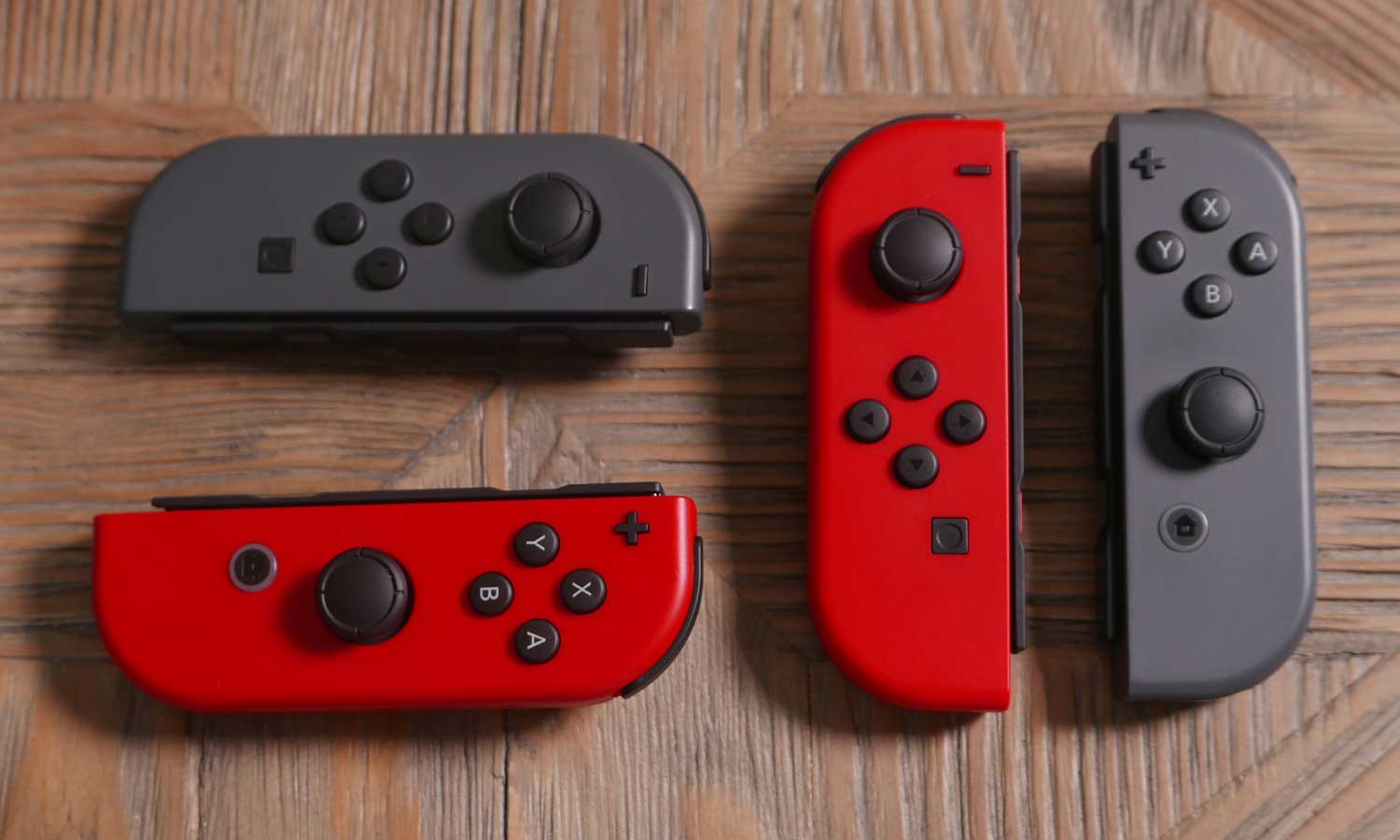
The Switch Lite, by contrast, doesn't have detachable controllers. What you see is what y'all get.
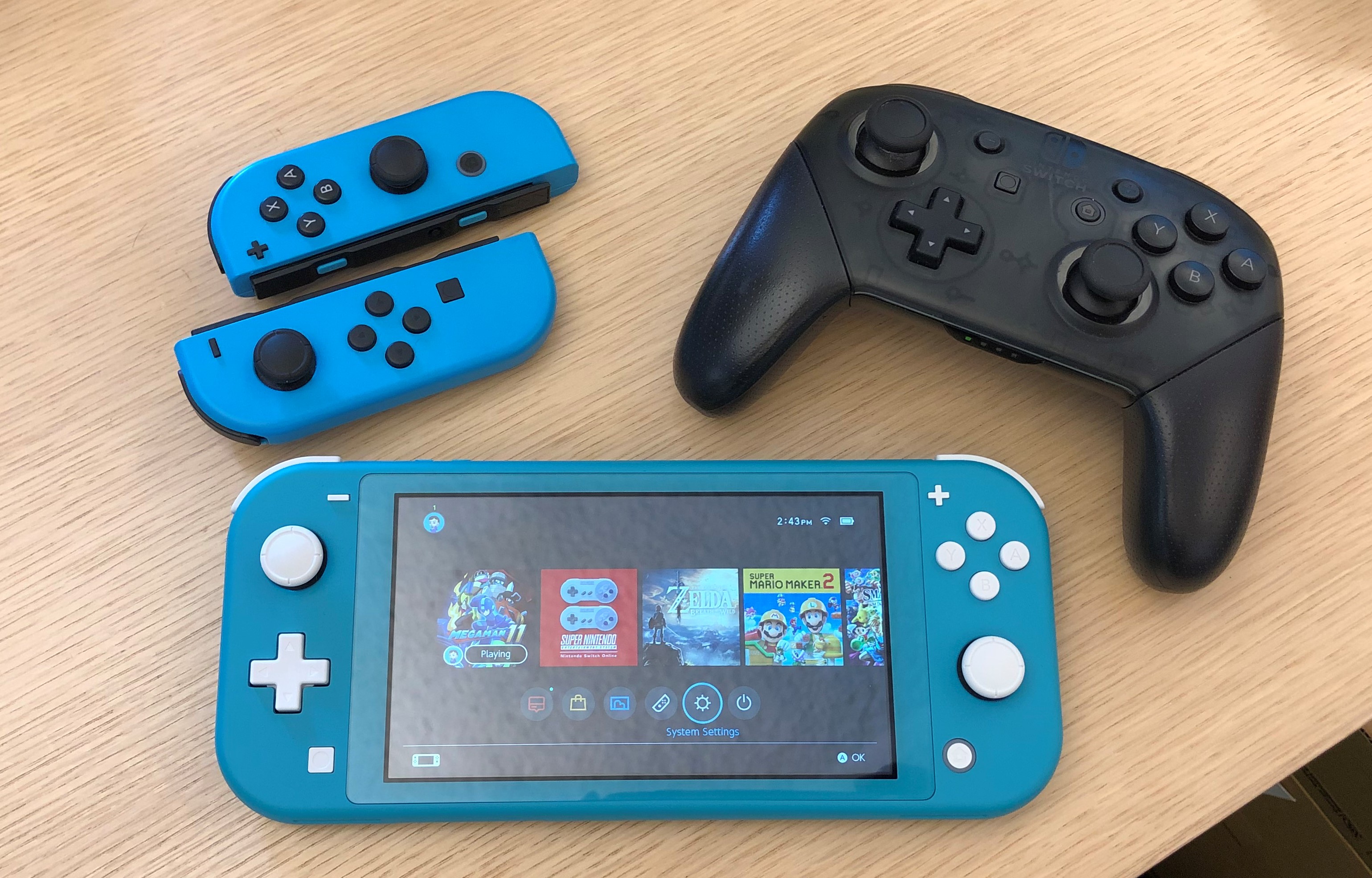
Granted, you could pair Joy-Cons (or the superior Switch Pro Controller) with any of the Switch models, including the Light. But since the Switch Lite doesn't stand freely, using external controllers with it is a chip of a challenge. You'd have to buy a third-party case or stand.
Nintendo Switch OLED vs. Nintendo Switch vs. Nintendo Switch Lite: Battery life
Due to its smaller chassis, the Switch Lite also has a smaller battery. Depending on the game, the Switch Lite can become between three and 7 hours of battery life. (More demanding games, like Zelda and Metroid, tend to drain the battery faster than retro or indie fare.) In our own testing, the Switch Lite lasted for 3 hours and 18 minutes on a single charge.
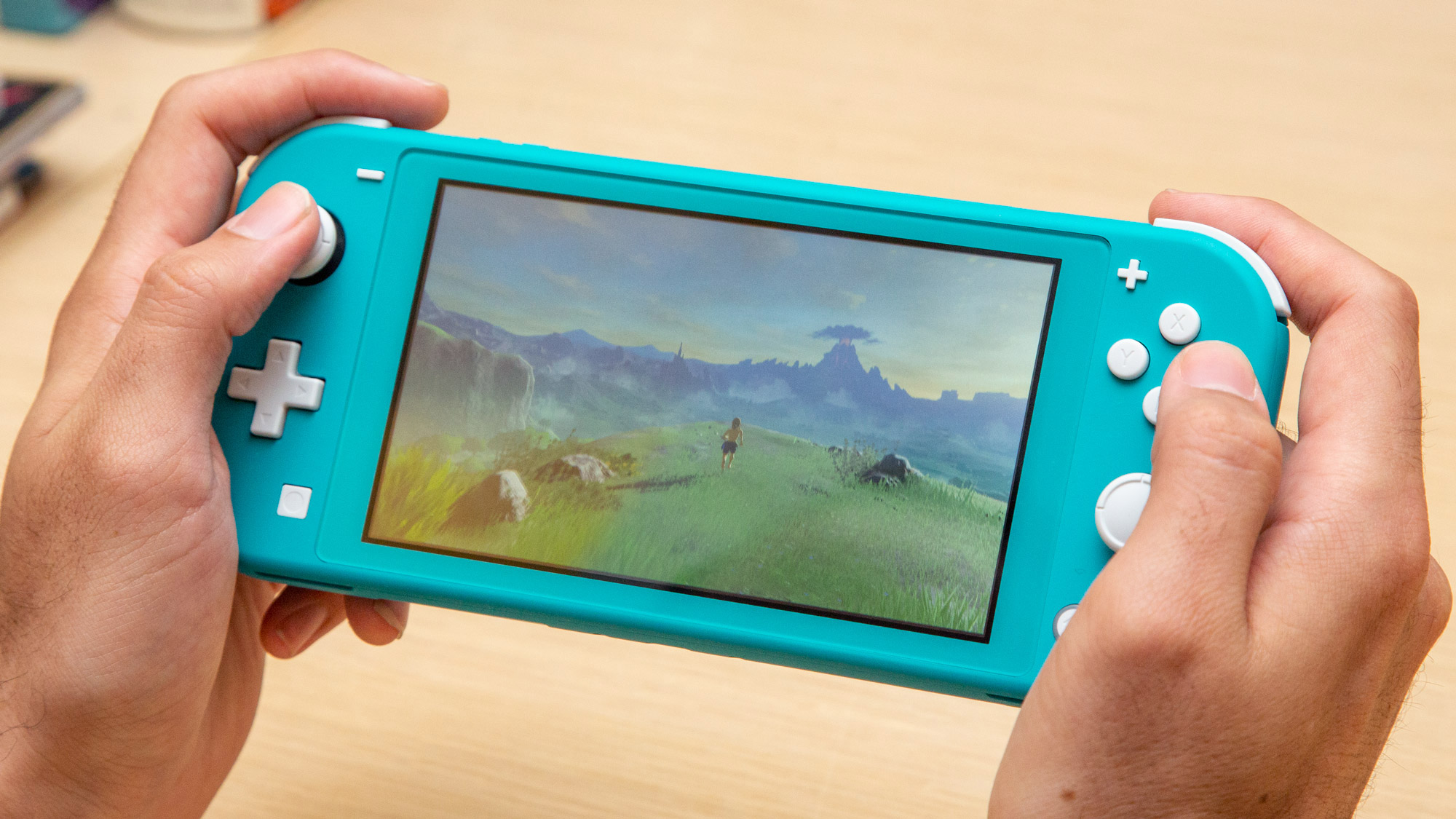
The Switch OLED and base Switch theoretically accept the same battery life: between four-and-a-half and nine hours, according to Nintendo. The OLED screen is bigger, merely also more ability-efficient.
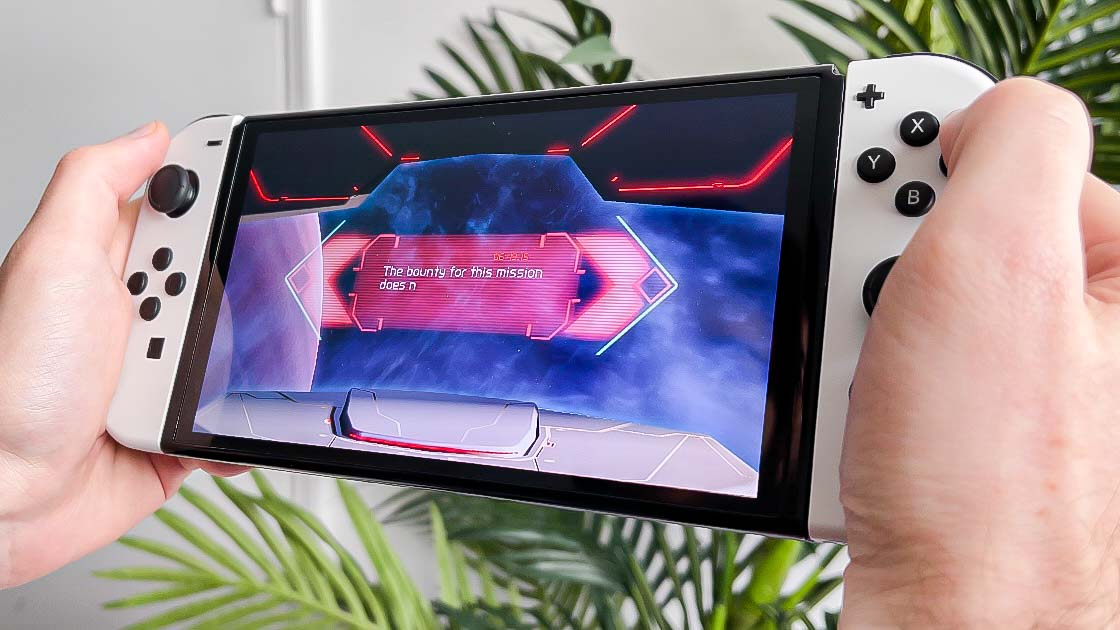
This calculus changes, however, depending on whether you have a launch-model Switch (from 2017 or 2018) or a refreshed Switch (from late 2019 to the present). Back in Nov 2019, Nintendo slapped a more efficient battery into the base model, which means that newer Switches simply have more battery life than older models do. The good news is that if y'all buy a new Switch today, y'all're guaranteed to get the 2019 refresh.
In our own testing, the Switch OLED got 5 hours of battery life on the dot, while the launch-model base of operations Switch got iii hours and 27 minutes. The 2019 refresh of the base Switch did amend, though, at iv hours and 40 minutes. That ways the Switch OLED probably has the best battery life amidst the three systems. But your exact playtime can change dramatically, depending on the game, the screen effulgence, the volume and then along.
Nintendo Switch OLED vs. Nintendo Switch vs. Nintendo Switch Low-cal: Price
Some other major deviation among the three Switch models is how Nintendo has priced them. The Switch OLED is the nearly expensive of the bunch at $350; the Switch Lite is the cheapest at $200; the base Switch is in-between at $300.
The cost differences are easy enough to explain. The Switch OLED is the most feature-rich of the 3 devices, so information technology costs the most. Likewise, the Switch Lite cuts out a lot of ballast to get to $200.
The only sticking indicate is the base of operations Switch. At $300, information technology'southward arguably still pretty expensive, given that the OLED is a much meliorate system for only $50 more. (To put things in perspective: an Ethernet adapter alone costs $30).
Still, the base Switch recently got a price cut in Europe; perchance North America will follow adjust.
Nintendo Switch OLED vs. Nintendo Switch vs. Nintendo Switch Low-cal: Recommendations
If you're not too fussed about cost, then the Nintendo Switch OLED is the Switch panel to get. It offers the nearly refined and premium Switch experience, and information technology's ideal for newcomers to Nintendo's latest games panel family.
At $50 less, the standard Nintendo Switch is fine. If you have one already and it'southward in expert shape y'all probably don't need the upgrade to the Switch OLED. If not, the actress $fifty for the OLED model seems a no-brainer.
The Nintendo Switch Lite is all-time for people who want a handheld-only experience. It'south ideal for people who desire to game on a long journey or on a commute on public send. It does lose out the ability to actually switch, but then that'southward reflected in the price.
Ultimately, the best Switch for you will come up down to preferences. Merely we'd definitely nod favourably to the Switch OLED.
Nintendo Switch OLED vs. Nintendo Switch vs. Nintendo Switch Lite: Buy now or expect?
The Nintendo Switch brand as a whole is more than than five years old now, with the original console launching in Mach 2017. But the Switch OLED has even so to reach its offset altogether.
Nevertheless there are murmurs of a Nintendo Switch Pro and Nintendo Switch 2, although these don't have a neat deal of substance behind them. All the same, they might be enough to take you think twice well-nigh getting 1 of the current Switch models.
Our advice is, if y'all want a Switch, get a Switch, Nintendo has already said at that place's more life left in the hybrid console. And there are more games on the horizon. Just that aside, the Switch now has a mature library of games that tin cater to a range of interests and work well in both docked and handheld style. And then we'd say it's a good time to enter the Nintendo Switch globe.
Source: https://www.tomsguide.com/face-off/nintendo-switch-oled-vs-switch-vs-switch-lite
Posted by: limaftere1980.blogspot.com
0 Response to "Nintendo Switch Vs Nintendo Switch Lite"
Post a Comment